New Accessibility Guidance Helps Create More Inclusive Indoor Recreation Facilities Across Aotearoa
New Accessibility Guidance Helps Create More Inclusive Indoor Recreation Facilities Across Aotearoa
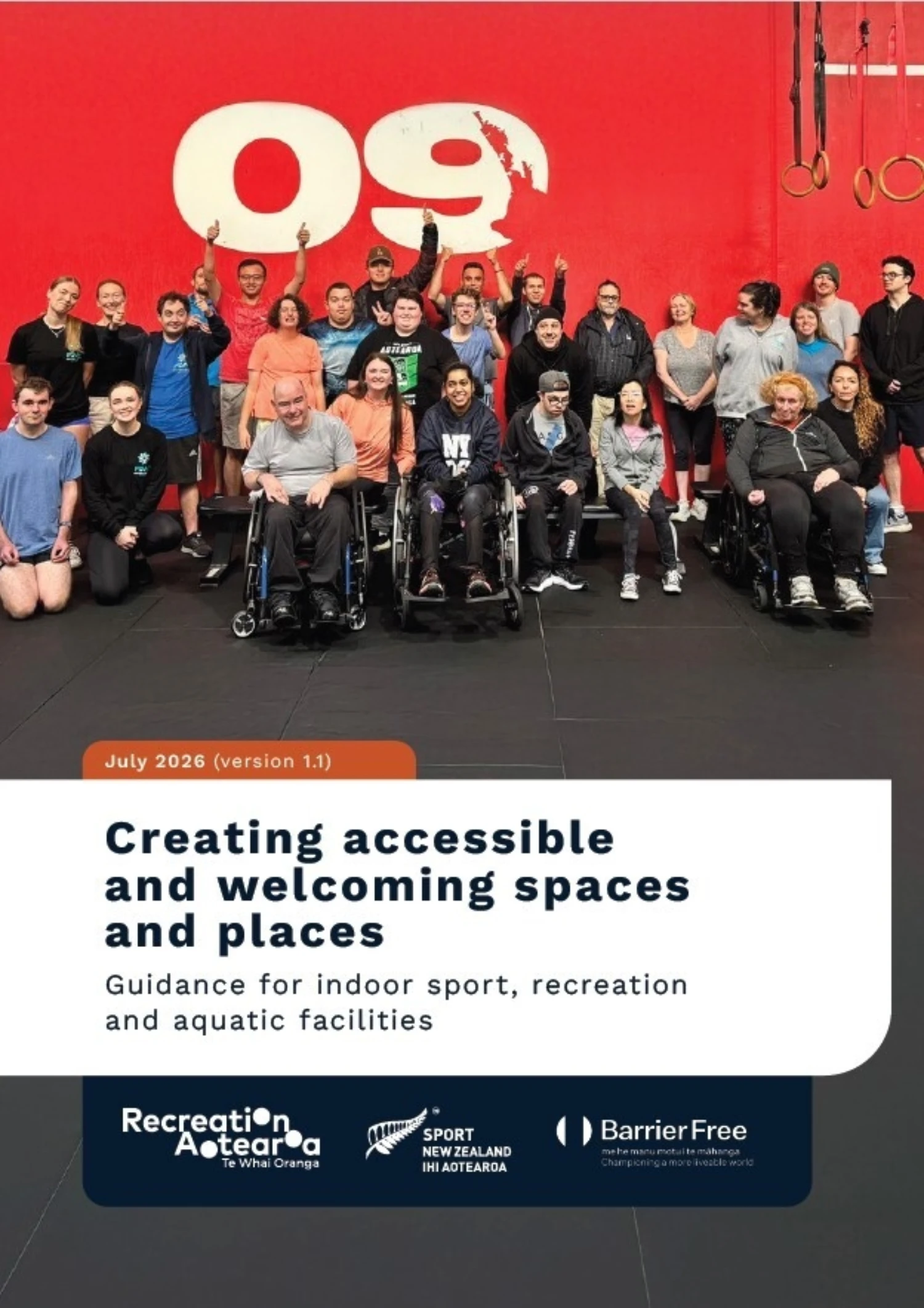
BarrierFree is proud to have partnered with Recreation Aotearoa and Sport New Zealand Ihi Aotearoa on the development of a new guidance resource designed to help organisations create more accessible and welcoming indoor recreation spaces across New Zealand.
The newly released Creating Accessible and Welcoming Spaces and Places guidance provides practical advice for the planning, design, operation and management of indoor sport, recreation and aquatic facilities. Developed with input from people with lived experience, industry partners and accessibility specialists, the resource supports a more inclusive approach to recreation facility planning, design, operations and customer experience.
For organisations planning new facilities or upgrading existing spaces, the guidance reinforces an important principle: accessibility delivers the best outcomes when it is considered from the very beginning.
Why Accessibility Planning Creates Better Recreation Facilities
Indoor recreation, sport and aquatic facilities are important community assets that support health, wellbeing and social connection. When accessibility is considered from the earliest planning and design stages, organisations can create spaces that are easier to use, more welcoming and more inclusive for a wider range of people.
The new guidance highlights practical ways to improve accessibility across facility design, customer experience and day-to-day operations, helping organisations deliver recreation environments that work better for everyone in the community.
Accessibility is about more than meeting minimum compliance requirements. It involves understanding how people experience a space and taking steps to ensure facilities are comfortable, intuitive and welcoming for users with a broad range of abilities, needs and preferences.
By addressing accessibility early, organisations can create better outcomes for visitors, staff and communities while reducing the need for costly changes later in a project's lifecycle.
Practical Guidance for Recreation and Aquatic Facilities
The guidance applies to a wide range of indoor recreation settings, including:
- Community recreation centres
- Indoor courts and training facilities
- Fitness and exercise facilities
- Swimming pools and aquatic centres
- Changing, shower and toilet facilities
It has been developed for anyone involved in the planning, design, development, management, operation or maintenance of recreation facilities, including councils, facility owners, recreation providers, architects, designers, project managers and accessibility advocates.
"This resource provides practical, action-focused guidance that organisations can use to support funding and design conversations, guide operational improvements, and advocate for better accessibility outcomes," says Recreation Aotearoa Chief Executive Sarah Murray.
Supporting Better Accessibility Outcomes
BarrierFree New Zealand was pleased to contribute specialist accessibility expertise throughout the development of the guidance.
"We congratulate Recreation Aotearoa on this significant achievement," said BarrierFree National Access Coordinator Lorraine Guthrie. "This guidance document promotes the early consideration of accessibility, helping to create more inclusive places and spaces for everyone."
This focus on early accessibility planning aligns closely with BarrierFree's work across New Zealand. As accessibility consultants, BarrierFree works with organisations to help create facilities that are both accessible and welcoming for a wide range of users.
When accessibility is integrated into planning, design and operational decisions from the outset, organisations are better positioned to create facilities that meet the needs of diverse communities while supporting long-term usability and inclusion.
Planning a Recreation Facility? Talk to BarrierFree Early
One of the key messages from the new guidance is that accessibility is most effective when it is considered early. Whether you're at the concept stage, preparing for a facility upgrade or looking to improve the accessibility of an existing recreation or aquatic centre, early accessibility advice can help deliver better outcomes and greater long-term value.
BarrierFree helped develop this guidance and supports organisations across New Zealand to implement accessibility best practice in recreation and community facilities.
Contact BarrierFree today to discuss accessibility consulting for recreation facilities, accessibility reviews and accessibility planning. Our team can help ensure accessibility is considered from the earliest stages of your project, creating better outcomes for your organisation and the communities you serve.